


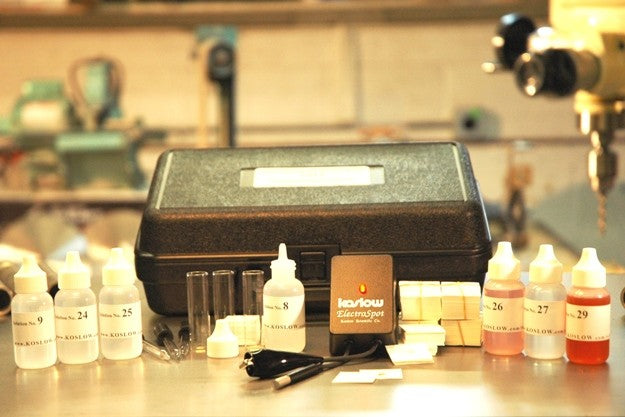


Is this the aluminum alloy that it's supposed to be? Can I conduct the same quality assurance inspections that my customers use? Can I assume foreign imports are what they claim to be? Is my stock labeled correctly? Inspect it yourself! The Aluminum Alloy ID Lab was specifically developed to identify various aluminum alloys. This capability eliminates the high incidence of costly aluminum alloy identification errors.
APPLICATIONS:
- Classifying aluminum into the following groups: 1000, 2000, 5000, 6000, and 7000.
- scrap sorting
- Quality Control
- inventory identification and labeling
- field repair and replacement checks
- welding compatibility determinations
|
ALLOY GROUP |
COPPER |
MAGNESIUM |
DISSOLUTION |
|
- |
- |
- |
|
|
2000 |
+ |
+ |
|
|
5000 |
|
+ |
(-) |
|
6000 |
|
+ |
+ |
|
7000 |
+ |
+ |
|
FEATURES:
- Easy to Use - no training necessary
- Economical - pennies per test
- Completely portable
- QC inspection approved method
- Fast & easy; 30 seconds per test.
- Non-destructive
- Kit includes solutions, current supply, and papers
- Neatly packaged in a durable carrying case
TEST PROCEDURE:
- Attach or touch the alligator clip to the metal
- Place a test paper on your metal
- Place a drop of solution A onto the paper
- Apply current to the moist spot using the Electro-Spot
- Follow with the addition of solution B
-
A vibrant color develops, revealing the composition!

HOW IT WORKS:
How can alloy inspection be so easy? Color spot tests isolate and identify the distinguishing element that separates the alloy you want from the one you don't. Copper and magnesium are all easily detectable with the 1513. It's simple.
WHY CHOOSE KOSLOW:
Maintaining the quality your customers demand doesn't require a fancy or expensive program. Use the kits specified by major companies worldwide to inspect your incoming and outgoing parts and materials. Pharmaceutical & food, aerospace, marine, and automotive industries all rely on Koslow Scientific kits for fast, conclusive results.
LEARN MORE:
- Demo The ElectroSpot Method
- Accessorize your Aluminum Kit by working side by side with the Metal Standards Collection 1900. This set of 24 coupon samples is an excellent tool for running spot checks on unmarked commercial metals and aluminum alloys. To identify tiny pieces of aluminum, see the Speck Check Kit.
- The Select-A-Kit Guide